


When we hear lived experiences, what changes?
World Mental Health Day 2026 Reflection | The Equality Pathway Initiative
This year’s World Mental Health Day theme, “Lived experiences heard: real voices, real change,” asks us to do more than tell people that their mental health matters. It asks whether we listen to people who know, from their own lives, what makes support feel safe or out of reach—and whether what we hear shapes our actions.
In her commemoration message, TEPI’s executive director speaks directly to queer people in Nigeria and beyond: it is okay to ask for help. It is okay to set boundaries. You are not alone. She reminds us that our peace and our future matter. Those words are simple, but they challenge the shame that can make someone feel they must carry everything quietly.
For LGBTQI+ young people, speaking about mental health can come with questions that others may never have to weigh. Will I be judged? Will someone share what I said? Will I have to explain my identity before anyone hears what I need? A caring response begins by making room for choice. Someone may want to talk; someone else may want privacy, a practical change, or help finding a qualified professional. Each deserves respect.
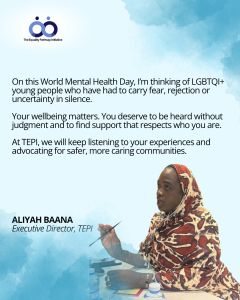
As our Executive Director said: “Your wellbeing matters. You deserve to be heard without judgment and to find support that respects who you are.” Being heard should not require a person to disclose a diagnosis, recount painful experiences publicly or become the face of a campaign. People should be able to decide what they share, with whom, and when.
Real change begins after listening. In a community space, it may mean asking before taking or posting a photograph. In a programme, it may mean offering a clear way to give feedback and explaining what happened to that feedback. In a workplace or health service, it may mean treating concerns seriously, protecting confidentiality and removing barriers to appropriate care. The people affected should have a say in which changes matter most.
At TEPI, our work in community dialogue, learning and advocacy is shaped by the people we serve. We want to keep making space for young LGBTQI+ people, including trans and gender-diverse people, to express what they need on their own terms—and to let those perspectives inform our decisions. Community connection is valuable; when someone needs mental health care, they should also be able to reach qualified, respectful support.
Today, consider one question: What will I do differently because I listened? Ask without pressing for a story. Respect a boundary without taking it personally. If you lead a team or service, invite input safely and report back on what changed. Real voices deserve more than a moment of attention. They deserve a meaningful place in the decisions that affect their lives.
Watch:
Support: If you need mental health care, consider contacting a qualified health professional or a locally verified service.
